Страницы

четверг, 18 мая 2017 г.

National treasures: Ukrainian embroidered shirts

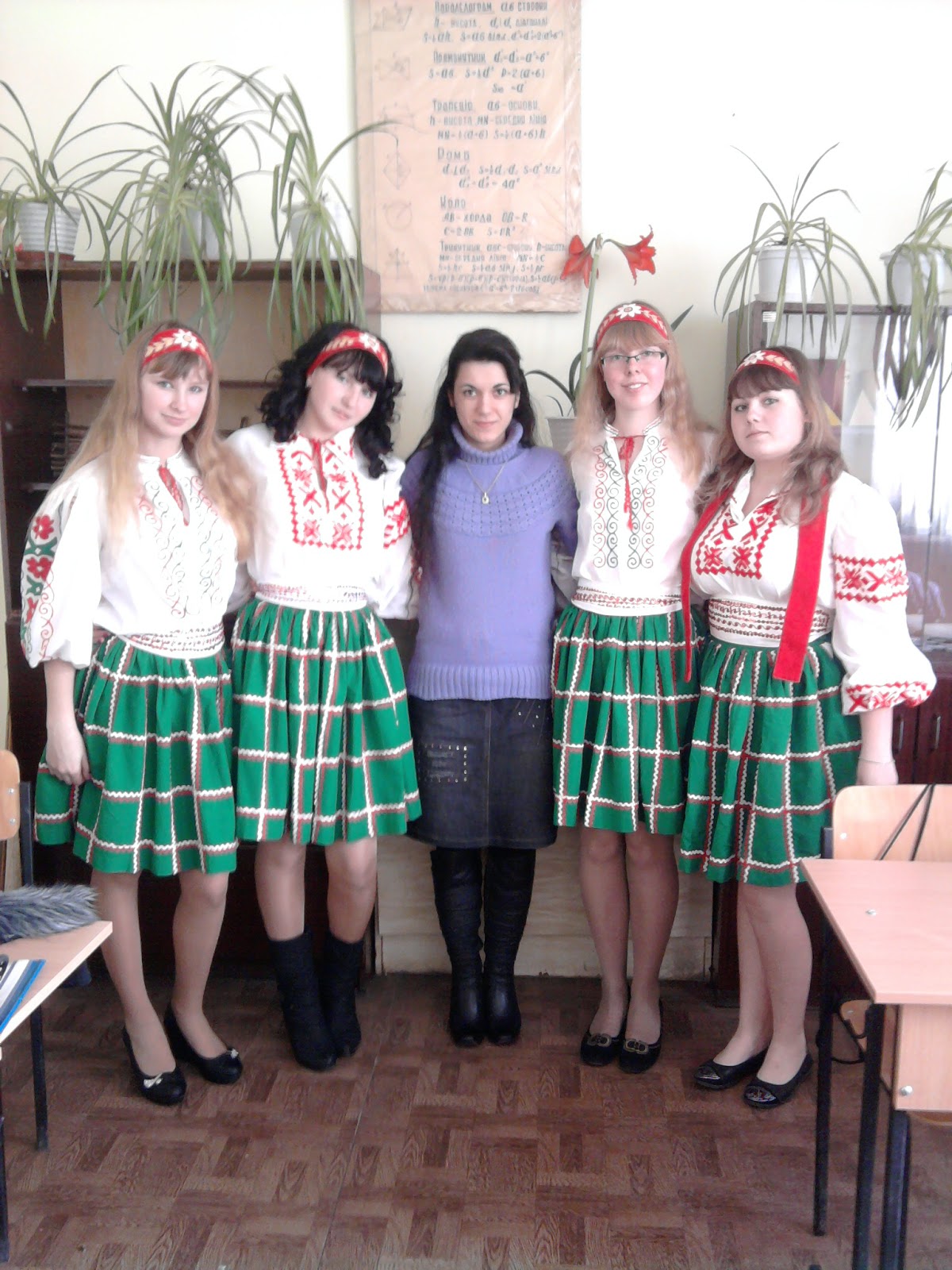
On May 18 my students have prepared a special project " National treasures", devoted to the Day of Ukrainian embroidered shirts, which we celebrate on the third Thursday of May every year.My girls showed the ornaments of Kharkiv region which are the  polychromatic designs made with half-cross or cross stitches.
An embroidered shirt( we call it 'vyshyvanka') for Ukrainians is more than  just an item of clothes. It's an amulet that brings together all the people who are proud of and respect  rich traditions of our nation.And by the way vyshyvanky are very fashionable today.
In Ukraine everyone could embroider in all regions. Each region had its own unique embroidery techniques.
So, let's have a little excursion into the variety of Ukrainian embroideries.
 
For Lviv region the main element was a flower which symbolized life and prosperity.
For Ivano-Frankivsk region the sign of svarga symbolized happiness.
For Cherkasy region the family tree symbolized family and life.
In Chernigiv region an octagonal star represented god and the sun.
In Vinnytsa region a caduceus represented evolution and involution.
In Kyiv there were hop, stylized grapes  on the embroideries.
Kirovohrad region had a very realistic designs if they embroidered  a bunch of grapes, it had got even shine and vine tendrils.
The geometric plants and geometric patterns were dominated in Luhansk region.
The traditional embroidered shirt in my native Poltava was usually embroidered with white thread surface technology.
In Chernivtsi region they embroidered especially flowered shirts.
A Rough thread in the technique of cross was used in Khmelnytsky region.
Shirts richly embroidered with floral ornaments in read and black colors were created in Kherson region.
The distinctive embossed pattern - these were embroidered shirts in Ternopil region.
Increadible black and white embroidered shirts were created in Sumy.
In Rivne they embroidered on a linen white canvas and there was a white main thread pattern.
Traditional Odessa Puhlyk shirts made from white cotton fabric.
Mykolaiv embroidered shirts were with specific collars.
In Zaporizhya  the shirts were usually adorned with embroidered floral motifs - flowers, viburnum and others.
People embroidered zigzag forms, so called "Doodles" in Zacarpatya.
Embroideries of  Zhytomyrwere small cross and rhythmic repetition patterns.
In  Donetsk region the shirt was decorated with openwork.
Sealing sleeves and neckline blouses embroidered with colored threads and black fleece in Dnipropetrovsk region.
So here it is, our beautiful, embroidered Ukraine!
Похожее изображение

воскресенье, 14 мая 2017 г.

Music in our life: Eurovision - 2017

Картинки по запросу фото eurovision 2017
This year Eurovision contest 2017 has taken  place in Ukraine and our country got a great opportunity to present its culture to the world. 
And I'm very proud of my country, because Ukraine really managed to present its culture and uniqueness to the world in a very high level.
Most of all I liked the hosts of the show opened the second Semi-Final with a medley of Eurovision songs in the Ukrainian way. It was really gorgeous.
If you like Eurovision songs, you may learn them with uaspeaking


четверг, 11 мая 2017 г.

The English contest "Greenwich-2016": summing up.

As you remember, my dear friends, on November 24 2016 we were answering the questions of the English contest "Greenwich-2016". This year the number of participants in our school has greatly increased (29 participants). And I'm very happy to admit this fact.
We all have been waiting for the results of this contest. And now I am happy to announce them.
We have won 4 golden certificates, 6 silver certificates and 2 bronze certificates.
Read more information about the results in this table:
 2 клас
№
П.І. учасника
Бали
Приз
1.
Лубянко Валерія
80
Золотий сертифікат
2.
Ягнюк Анна
75
Срібний сертифікат
3.
Шеховцов Артем
75
Срібний сертифікат
4.
Овчаренко Софія
75
Срібний сертифікат
5.
Маніло Богдан
35
Сертифікат учасника
6.
Білаш Ігор
35
Сертифікат учасника
 4 клас
№
П.І. учасника
Бали
Приз
1.
Хайло Ірина
80
Золотий сертифікат
2.
Соколов Ярослав
80
Золотий сертифікат
3.
Ратов Сергій
80
Золотий сертифікат
4.
Овчаренко Анна
72
Бронзовий
сертифікат
5.
Бондар Сергій
55
Сертифікат учасника
6.
Полозюк Анна
52
Сертифікат учасника
7.
Шевченко Юрій
50
Сертифікат учасника
8.
Широкорад Вікторія
47
Сертифікат учасника
9.
Попсуліс Тетяна
35
Сертифікат учасника

5 клас
№
П.І. учасника
Бали
Приз
1.
Шевченко Анастасія
75
Срібний
сертифікат
2.
Широкорад Анна
68
Сертифікат учасника
3.
Лимар Максим
56
Сертифікат учасника
4.
Воропаєв Олександр
54
Сертифікат учасника

6 клас
№
П.І. учасника
Бали
Приз
1.
Кузніченко Максим
64
Сертифікат учасника
2.
Попсуліс Катерина
50
Сертифікат учасника
3.
Галушко Орина
43
Сертифікат учасника

7 клас
№
П.І. учасника
Бали
Приз
1.
Юрченко Анастасія
75
Срібний сертифікат
2.
Горозій Анастасія
75
Срібний
сертифікат
3.
Рогачова Діана
54
Сертифікат учасника

8 клас
№
П.І. учасника
Бали
Приз
1.
Воробєй Кристина
72
Бронзовий
сертифікат
2.
Маніло Юлія
66
Сертифікат учасника

11 клас
№
П.І. учасника
Бали
Приз
1.
Фархадова Есміра
61
Сертифікат учасника
2.
Шевченко Катерина
61
Сертифікат учасника
I want to congratulate all the participants of the contest with their victories and wish all of you all the best in your study. I am very proud of all my students and happy to see how they get success in learning English.
I want to share our happy moments with all of my readers.
Our friendly team
My sixth graders
My eleventh graders


среда, 10 мая 2017 г.

Remembrance poppies/Маки пам'яті.

Картинки по запросу з днем перемоги

In 1915, during the First World War, Canadian military physician John MacCrae wrote the poem "In Flanders Field" to honor his friend, who died from shrapnel wounds in the battle of Ypres.
 John MacCrae died in 1918 and was buried in France. His Canadian house has been converted into a museum. There is a slab near it, engraved with his poem.


У полі Фландрії поміж хрестами

Гойдає вітер мак рядами,
Щоб знали місце, де ми є;
Там жайвір ноту дістає
Ледь чутно між гармат місцями. 


Нас більш нема. Хоч цими днями
Жили, стрічали сонце з вами.
А зараз ложе в нас он де
У полі Фландрії.


Забудьте свари з ворогами,
Слабкими кидаєм руками
Вам факел, хай снаги стає.
Без клятви не заснем ніде,
Хоч маки і ростуть над нами
У полі Фландрії.
Inspired by "In Flanders Fields", American professor Moina Michael resolved  to wear a red poppy to honour the soldiers who had died in the war. She also wrote a poem  called "We shall keep the faith".

Oh! you who sleep in Flanders Fields,
Sleep sweet - to rise anew!
We caught the torch you threw
And holding high, we keep the Faith
With All who died.

We cherish, too, the poppy red
That grows on fields where valor led;
It seems to signal to the skies
That blood of heroes never dies,
But lends a lustre to the red
Of the flower that blooms above the dead
In Flanders Fields.

And now the Torch and Poppy Red
We wear in honor of our dead.
Fear not that ye have died for naught;
We'll teach the lesson that ye wrought
In Flanders Fields.

By Moina Michael,1918

The symbolism of the Poppy varies greatly from country to country, but most of them share at least one  common meaning for this particular flower: it's a symbol of remembrance for those who fought and helped in the war.